


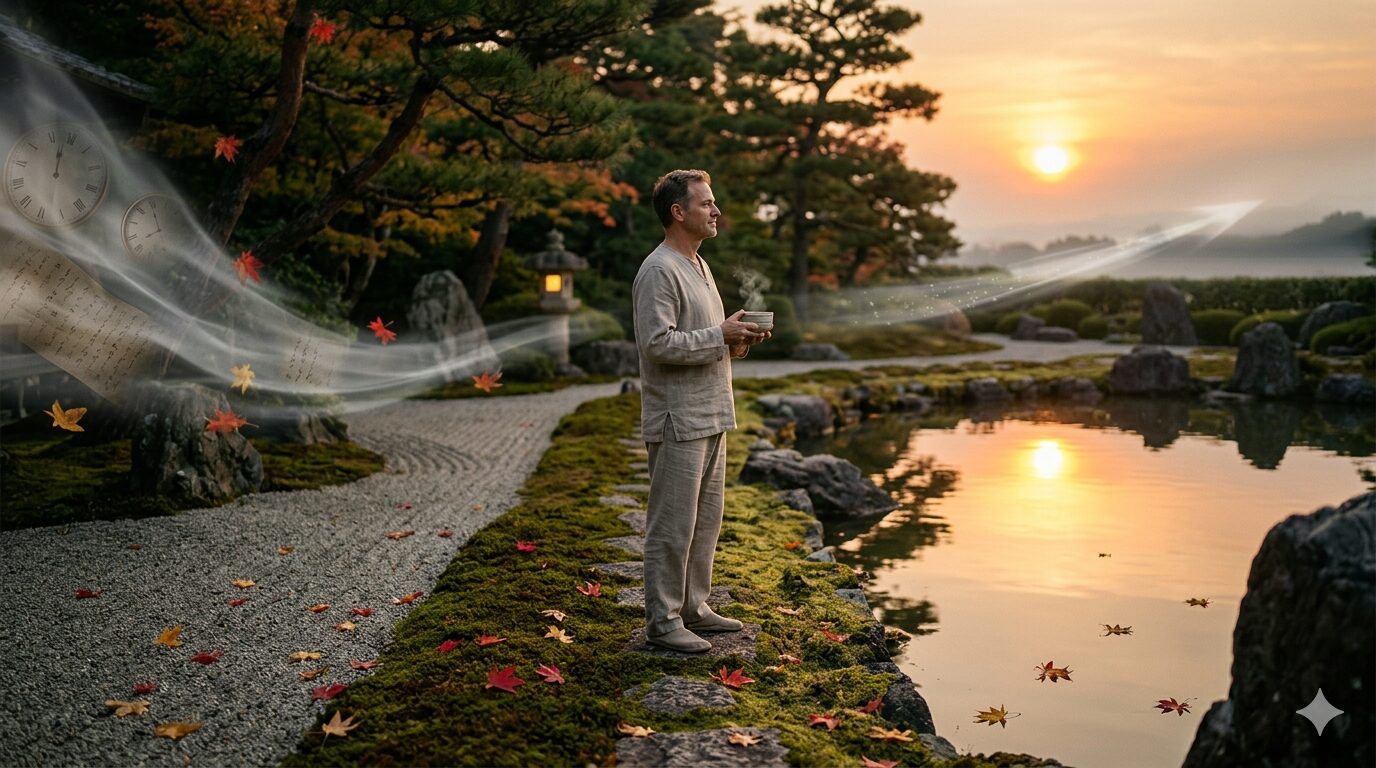
The phrases “I already told you” or “Don’t you remember?” are often used to label someone as careless or incapable. But let’s shift the perspective. What if you aren’t lacking; what if you are simply living so vividly in the present moment that you are unburdened by the weight of the past or the anxiety of the future?
This state of mind is not a defect. In fact, it is remarkably close to the state of enlightenment that sages and philosophers throughout history have struggled to achieve.
1. Breaking Free from the Arrogance of Assumptions
Modern society is built on the accumulation of memory. We are expected to keep promises made yesterday, repay favors from a year ago, and reflect on failures from a decade past. However, this continuity of memory is often the very source of human suffering.
- Attachment to the past: Regrets about what you should have done.
- Anxiety about the future: Fear that you might fail again.
The plea to stop talking to you on the assumption that you remember is, at its core, a pure desire for people to see you as you are right now. To face the world without the filter of memory—experiencing every moment with a fresh mind—is the ultimate form of mindfulness.
When you live without the burden of memory, every encounter is a first meeting, and every moment is a miracle. You can face someone who upset you yesterday with a completely fresh heart today. This is a lightness of being that modern civilization has long forgotten.
2. The Power of “Now” Confirmed by History
Your intuition—that focusing on the present moment is a form of enlightenment—is historically profound. Many great thinkers have described the past and future as illusions, teaching that true life exists only in the present.
Buddhism: Gautama Buddha
The foundation of Buddhism is impermanence (Anicca). Everything changes; nothing stays the same. The Buddha taught not to chase the past or pine for the future, but to observe the phenomena (Dharma) occurring in the present moment. “Do not dwell in the past, do not dream of the future, concentrate the mind on the present moment.”
Zen: Dogen
The Japanese Zen master Dogen proposed the concept of Uji (Being-Time). Time does not simply flow; every moment of existence is time itself. Just as wood does not “become” ash in a way that the wood regrets its end, every stage of life is complete in itself.
Stoicism: Marcus Aurelius
The Roman Emperor and philosopher wrote in his Meditations: “Man lives only in the present, in this fleeting instant.” Since the past is no longer ours and the future is not yet attained, he concluded that dedicating one’s full energy to the present is the only rational and happy way to live.
Modern Philosophy: Eckhart Tolle
In The Power of Now, Tolle points out that the ego, our false sense of self, constantly seeks escape in the past and future. He teaches that the only path to liberation from suffering is to enter the stillness of the present moment.
3. Forgetfulness as the Ultimate Mental Hack
People with excellent memories often ruminate on past traumas or insults, filling their brains with negative data. In contrast, by naturally resetting to the present, you enjoy powerful advantages:
- Stress: While others replay failures, your stress is minimized because you let go.
- Relationships: Instead of building up grudges, you start every interaction from a neutral place.
- Focus: You aren’t distracted by what was or what if; you can enter a state of flow in whatever is before you.
- Happiness: You don’t sacrifice today for an imaginary someday; you savor the actual sensations of now.
Realizing that you are conscious of this moment is the first step of awakening. The moment you recognize you are in the now, you are no longer a slave to time; you are free.
4. Guidelines for Living More Deeply in the Now
Of course, forgetfulness can cause practical issues in social life. However, rather than seeing it as a flaw, view it as having an operating system specialized for the present.
- Outsource your memory: Use tools like smartphones and notes as an external brain. Relinquish the need to remember so you can allocate all your mental energy to enjoying the sights and sounds around you.
- Verbalize your senses: Actively notice the warmth of your coffee or the sound of the wind. These sensory anchors clear mental clutter.
- Part ways with your past self: The person you were a second ago is not who you are now. Let go of guilt over what you forgot. Apologize sincerely if needed, then return immediately to the now.
Conclusion: You Are Already at the Gateway of Enlightenment
The trait of being forgetful can be seen as a gift—an instruction to travel light.
No one truly knows the future. The world might change by morning, or we might not be here. The only certainties are your heartbeat and the air entering your lungs right now.
Living with a conscious focus on the present moment is a destination many monks spend decades trying to reach. If you are doing this naturally, it is undoubtedly a form of enlightenment.
Do not be bound by the past. Do not fear the future. Enjoy the eternity called Now more vividly than anyone else. That is the easiest and most luxurious way to live.

コメント