


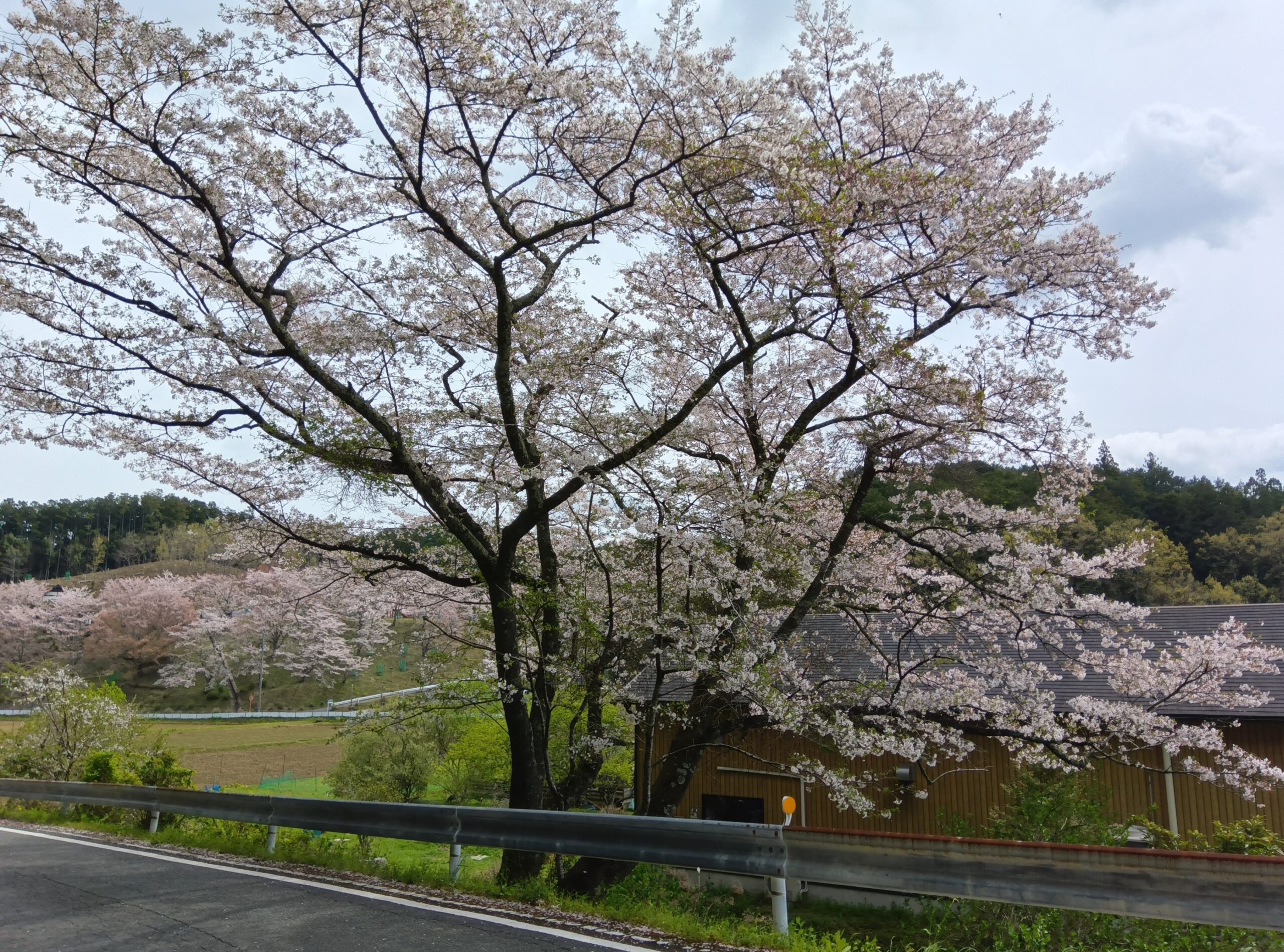
When spring arrives, the Japanese archipelago is bathed in soft shades of pink. Cherry blossoms are not merely seasonal flowers; they are a deeply rooted symbol within the Japanese spirit and aesthetic sensibility. Since ancient times, people have found meaning in sakura, projecting their own lives onto its fleeting brilliance. This article explores the relationship between the Japanese people and cherry blossoms, the philosophy of life and death embedded within them, and how they are perceived around the world.
Beauty Beyond Full Bloom
In many cultures, flowers are most valued at their peak bloom. In Japan, however, cherry blossoms are different. While their full bloom is certainly admired, it is the moment they begin to fall that often moves people most deeply.
Petals dancing in the wind are called sakura fubuki—a “cherry blossom snowstorm.” This sight is not seen as an end, but rather as a completed form of beauty. It is through falling that cherry blossoms leave their strongest impression.
This perspective reflects the Japanese aesthetic concept of mono no aware—the awareness of impermanence. Because something does not last forever, it becomes all the more beautiful. Sakura embodies this idea perfectly.
Cherry Blossoms and the Japanese View of Life and Death
Cherry blossoms are often seen as a metaphor for life itself. Their brief existence—from blooming to falling—mirrors the transience of human life. In the era of the samurai, the idea of “falling gracefully” was considered a virtue, and sakura became closely tied to that ideal.
Yet this is not simply a glorification of death. Rather, it poses a deeper question: how should one live, knowing that life is finite?
The journey to full bloom represents effort. The moment of blooming represents brilliance. And the act of falling represents a natural and unhesitating return to the cycle of life. Together, these stages form a model of an ideal way of being.
Cherry blossoms do not merely symbolize how life ends—they ask how life is lived.
Sakura in the Satoyama Landscape
While cherry blossoms in urban parks are stunning, the true “original landscape” for many Japanese people lies in the rural satoyama. A single cherry tree standing in a field, or soft pink hues stretching along a mountainside, represent harmony between nature and human life.
There is no flashy spectacle here, only quiet beauty intertwined with everyday living. Farmers pausing to look up at the blossoms, children playing beneath drifting petals—these ordinary scenes give sakura its deeper meaning.
Cherry blossoms are both extraordinary and deeply ordinary. This duality enriches their significance in Japanese culture.
Sakura Fubuki and Japanese Sensibility
Sakura fubuki, the flurry of falling petals, is one of the most symbolic images of Japanese sensibility. People from other cultures often find it surprising that something “ending” is celebrated.
In many parts of the world, falling flowers signify decline or loss. In Japan, however, the act of falling is often seen as the most beautiful and memorable moment.
Underlying this is the idea that completion includes ending. Cherry blossoms do not conclude at full bloom; they complete their story by falling.
Standing beneath a shower of petals, people instinctively pause and look upward. In that fleeting moment, they become aware of the present—the “now.” It is almost a meditative experience, reconnecting them with something often lost in the busyness of modern life.
How the World Sees Japanese Cherry Blossoms
Cherry blossoms are not unique to Japan; they exist in many parts of the world. In places like Washington, D.C., they are celebrated as a symbol of spring.
However, the meaning attached to sakura differs across cultures.
- In many countries: a beautiful seasonal flower, a tourist attraction
- In Japan: a symbol of time, life, and impermanence
These differences stem from cultural backgrounds. Outside Japan, cherry blossoms are often appreciated for their beauty during their blooming period. In Japan, they are valued as a complete cycle, including their fall.
Interestingly, Japan’s hanami (flower-viewing) tradition has begun to spread globally. The custom of gathering under the blossoms to eat, drink, and share time together is being embraced as an experiential way to connect with nature.
The Expanding Meaning of Sakura Worldwide
As globalization advances, cherry blossoms have become widely recognized as a symbol of Japan. Through tourism, film, and animation, the image of sakura has spread across the globe.
However, the deeper emotional and philosophical aspects—such as impermanence and mono no aware—are not always fully understood.
That is why it is important for Japanese people to articulate and share these meanings. Sakura is not just a flower; it is a quiet expression of time, mortality, and the question of how to live.
Conclusion — Beauty in Falling
Cherry blossoms in full bloom are undeniably beautiful. Yet what touches the Japanese heart most deeply may be the moment they begin to fall.
That moment is not simply an ending—it is a form of completion, and also the beginning of a new cycle. Sakura blooms and falls in the same way each year, yet each time, it evokes different emotions.
Life is much the same. Because it is finite, every moment shines.
As petals drift through the spring air, people in Japan instinctively understand this truth. Cherry blossoms, without words, teach what is most essential about life.

コメント