


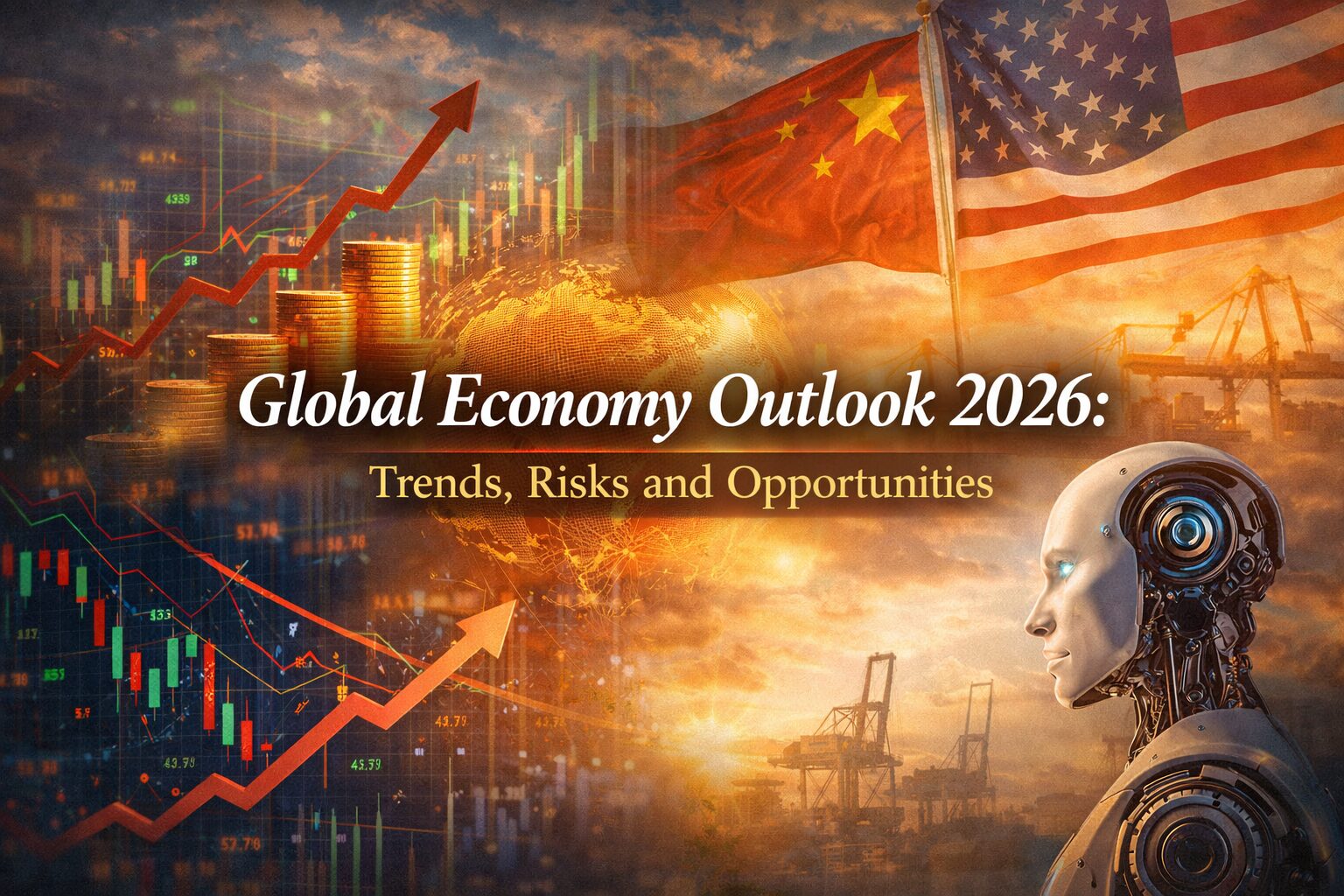
To understand the global economy in 2026, it is no longer sufficient to ask a simple question like “growth or stagnation.” What truly matters is recognizing that the very structure of the economy is undergoing a fundamental transformation.
For decades, the global economy expanded under two key assumptions: globalization and low interest rates. Companies moved production overseas in search of cheaper labor, while governments fueled growth through monetary easing. However, these assumptions are now beginning to collapse.
One of the most significant turning points is the normalization of inflation. In the aftermath of the pandemic, combined with geopolitical tensions and fluctuating resource prices, inflationary pressure has become structural. Central banks are now forced to raise interest rates, signaling the end of the era of cheap money.
Another major shift is the transition toward a “fragmented world.” Economic blocs are forming, driven by geopolitical rivalries such as the U.S.-China conflict. Supply chains are being redesigned with a focus on security rather than efficiency. While this increases costs for businesses, it also creates new opportunities for domestic production and industrial investment.
Equally important is the rapid advancement of technology, particularly artificial intelligence. The evolution of generative AI has made it increasingly realistic that even white-collar jobs may be replaced. This is not merely about efficiency—it represents a fundamental redefinition of the value of human labor.
Taken together, these trends suggest that the global economy in 2026 will be characterized by low growth but high volatility, where risks and opportunities expand simultaneously.
So how should individuals respond in such an environment?
First, it is essential to build assets that can withstand inflation. In an era where cash steadily loses value, participating in economic growth through equities and index investing becomes critical. Rather than reacting to short-term market fluctuations, a long-term perspective is required.
Second, continuous reinvestment in skills is crucial. In the age of AI, value lies not in routine tasks but in uniquely human abilities—critical thinking, judgment, and creativity. Reading, learning, and intellectual growth will directly impact future earning potential.
Third, optimizing living costs is more important than ever. In an inflationary environment, restructuring spending habits is key. By eliminating unnecessary consumption driven by vanity or inertia and focusing resources on what truly matters, individuals can build greater financial resilience.
Ultimately, the question is this:
Will you see this era of change as a source of anxiety—or as an opportunity?
While we cannot control the broader forces shaping the global economy, we have full control over how we respond. The year 2026 is not just another point in time; it is a turning point that will shape the next 10 to 20 years.
Instead of being distracted by short-term noise, we must focus on fundamentals and steadily invest in ourselves—quietly, but with unwavering consistency.

コメント